ZHONG KUI SERIES · 01
From a dream to a guardian
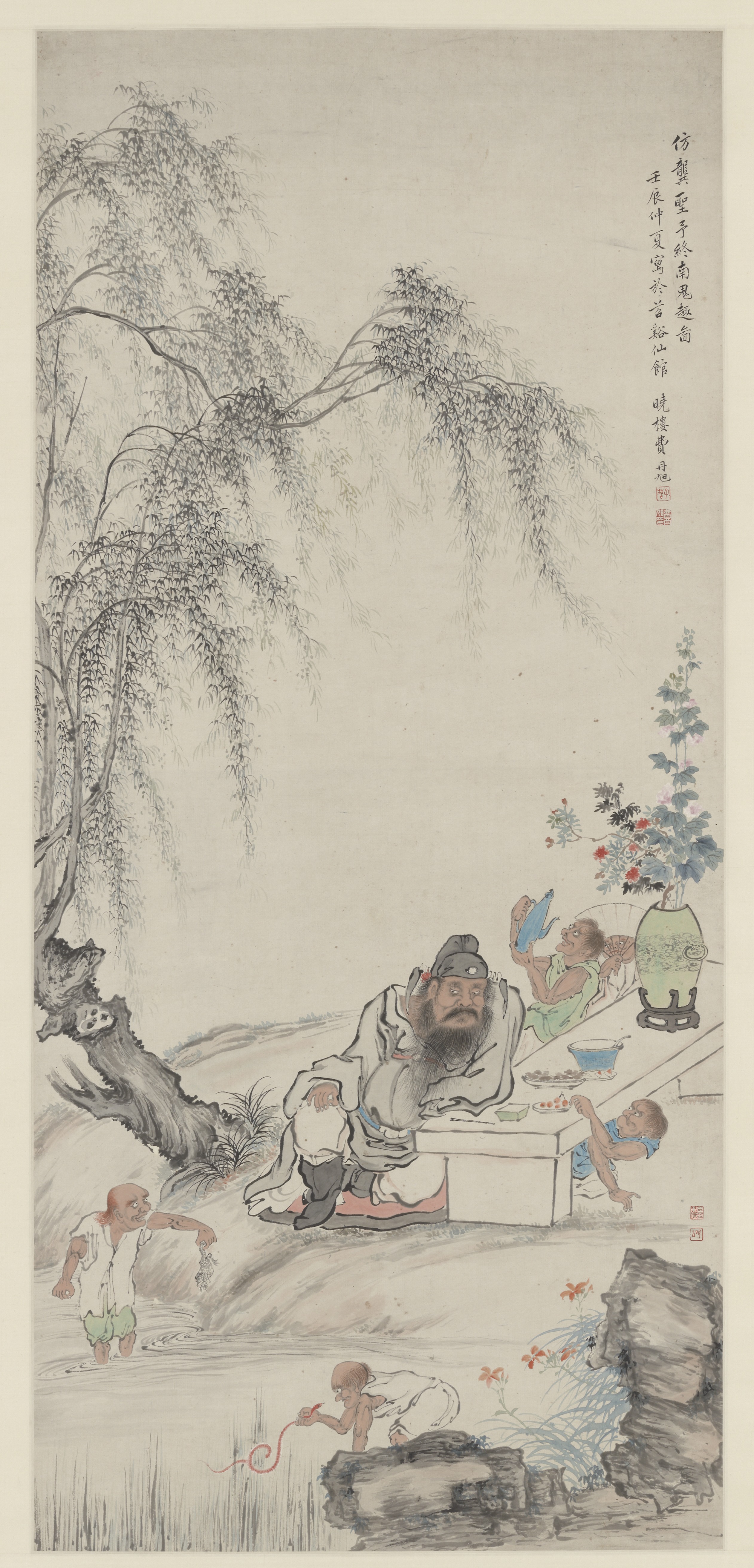
Zhong Kui is one of the best-known guardian figures in Chinese folklore. His fierce gaze, formal robe, sword, and heavy beard have appeared in paintings, New Year prints, opera, and household imagery for centuries. Yet the story behind him is not a single historical biography. It is a layered tradition, shaped by storytelling, ritual, and art.
The Tang-dynasty dream
In the familiar legend, the Tang emperor Xuanzong falls ill and dreams of a powerful figure who captures a troublesome spirit. After the emperor recovers, the painter Wu Daozi is asked to paint what was seen in the dream. The episode belongs to legend, not modern biography, but it gave later generations a memorable explanation for Zhong Kui's role as a demon-queller.
Another widely repeated version makes Zhong Kui a learned man from the Zhongnan Mountains. Though talented, he is said to have suffered injustice because of his appearance. His transformation into a guardian then turns private disappointment into a public moral image: courage, discernment, and a refusal to surrender to what is wrong.
The value of the legend is cultural and imaginative. It is not a claim that an image, object, or artwork can guarantee protection or a particular outcome.
Why the story lasts
Legends endure when they give a durable question a memorable form. Zhong Kui asks how someone might face disorder without becoming ruled by it. In that sense, his severe expression is not merely frightening. It is a visual language for steadiness at a threshold—between inside and outside, danger and safety, uncertainty and resolve.