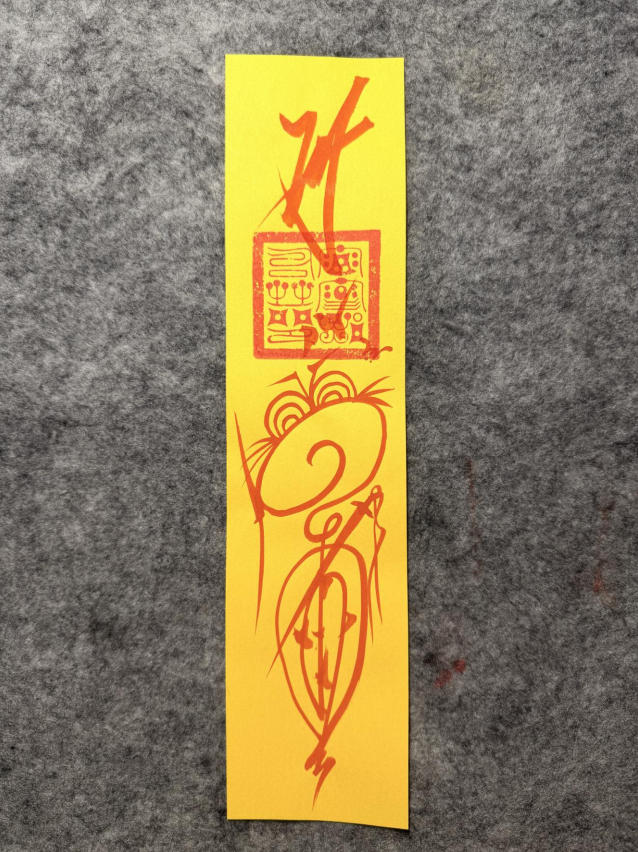
Zhong Kui is one of the most enduring guardians in Chinese visual culture. He is usually recognized by a formidable face, a scholar-official's robe, a sword, and a posture that seems to occupy the entire doorway. Across paintings, New Year prints, opera, household custom, and calligraphy, he has come to stand for a vivid idea: meeting disorder with resolve.
 From a dream to a guardianPART 01 · THE LEGEND
 The guardian in motionPART 02 · IN ART
 Paper, pigment, and the trace of a handPART 03 · MATERIAL & DETAIL
A legend, not a historical biography
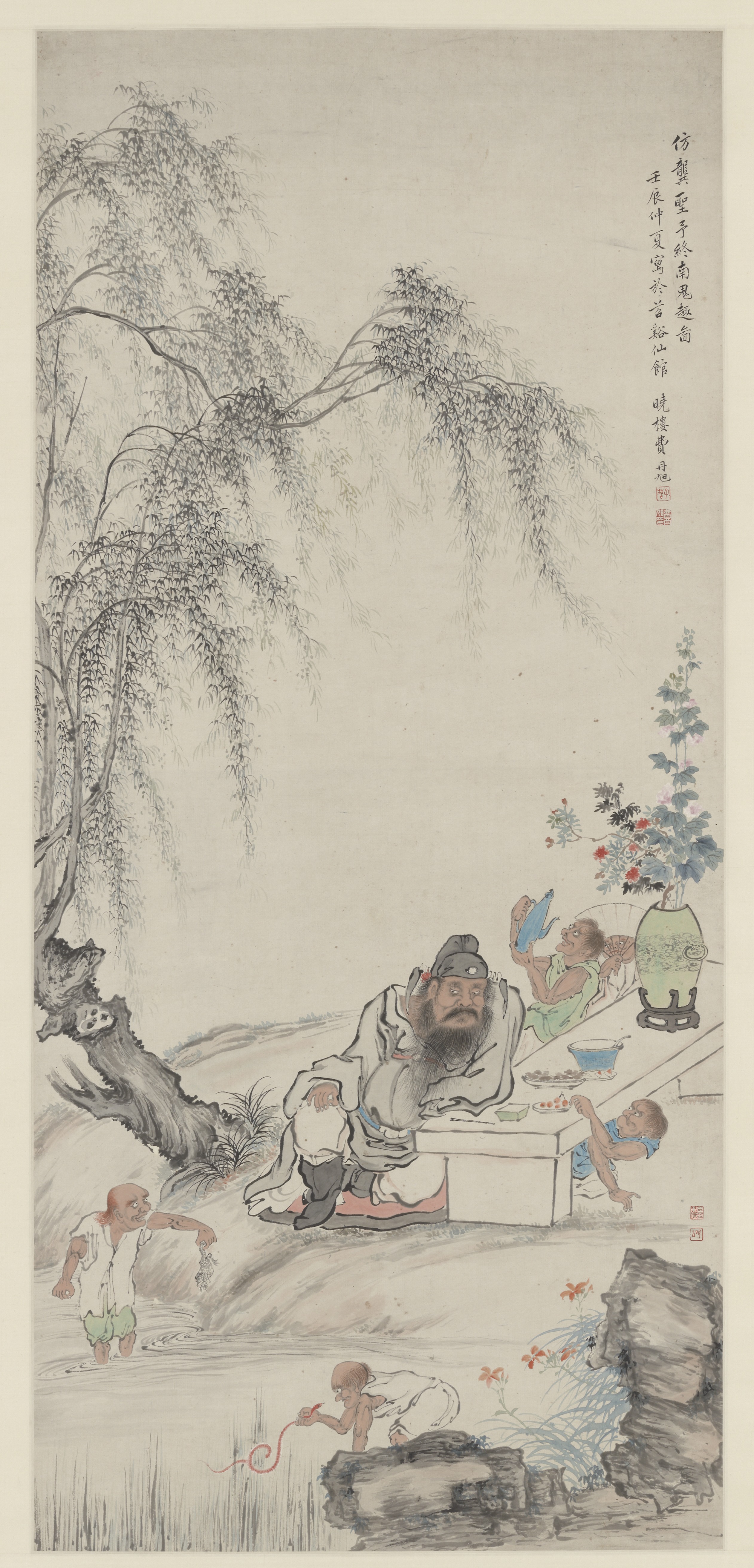
There is no single, fixed life story for Zhong Kui. His image was shaped over centuries by folklore, ritual, literature, and art. In the best-known Tang-dynasty legend, the ailing Emperor Xuanzong dreams of a powerful figure who captures a troublesome spirit. After recovering, the emperor asks the painter Wu Daozi to give the dream a form. The story is a legend, but it helped establish Zhong Kui as the great demon-queller of the Chinese imagination.
Another popular telling calls him a learned man from the Zhongnan Mountains whose appearance caused him to be treated unjustly, despite his talent. In this version, his later elevation turns a personal injustice into a moral image: clear judgment, courage, and the refusal to yield to what is wrong. The variations matter. They show that Zhong Kui is not a single historical person to be decoded, but a cultural figure continually retold.
How to recognize Zhong Kui
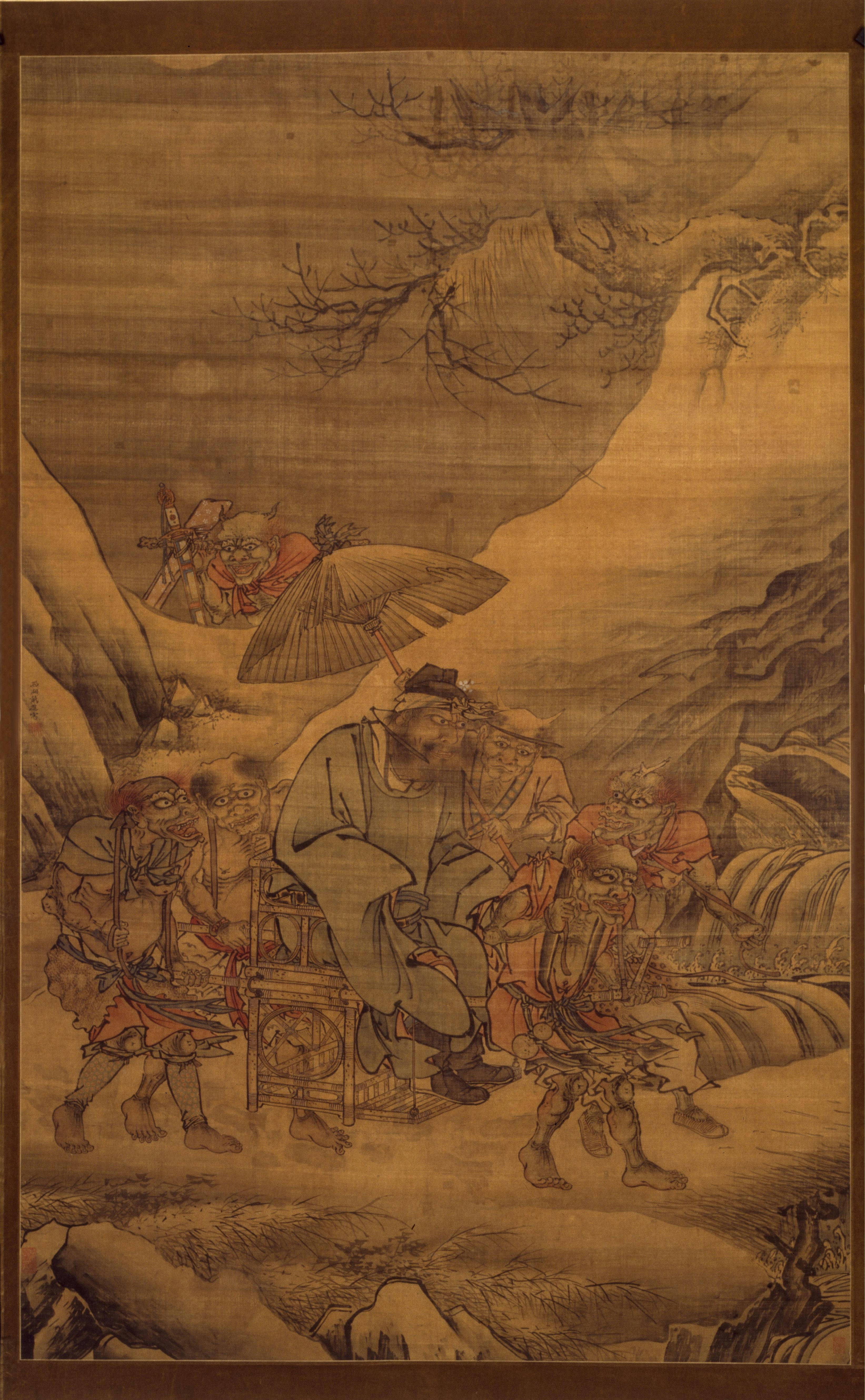
Traditional descriptions emphasize a fierce gaze, a dark or red face, heavy brows, a thick beard, formal robes, and a sword. In some images he holds a seal or a treasure; in others, bats appear as a visual play on fu, the Chinese word associated with blessing. He may be shown on foot, on a journey, or surrounded by small spirits. The exact arrangement changes from one painting and region to another, but the dramatic contrast remains: a stern guardian set against the restless world he confronts.
Historic paintings make that character visible in different ways. The Yuan painter Gong Kai imagined Zhong Kui in a strange, mobile procession. In a fifteenth-century work now in the Palace Museum, Beijing, Dai Jin depicts him travelling through a snow-filled night while small demons attend him. These are not illustrations of one official story; they are artists' interpretations of a powerful shared subject.
From New Year pictures to seasonal custom
For centuries, Zhong Kui images were associated with the home and its threshold. The Palace Museum notes that they were first displayed as seasonal pictures around the New Year; by the late Ming and early Qing, the custom of hanging them had also moved into the Dragon Boat Festival season. This history helps explain why a doorway appears so often in modern descriptions of him. It is both a physical entrance and a symbolic place for care, discernment, and welcome.
Reading a hand-drawn talisman-inspired work
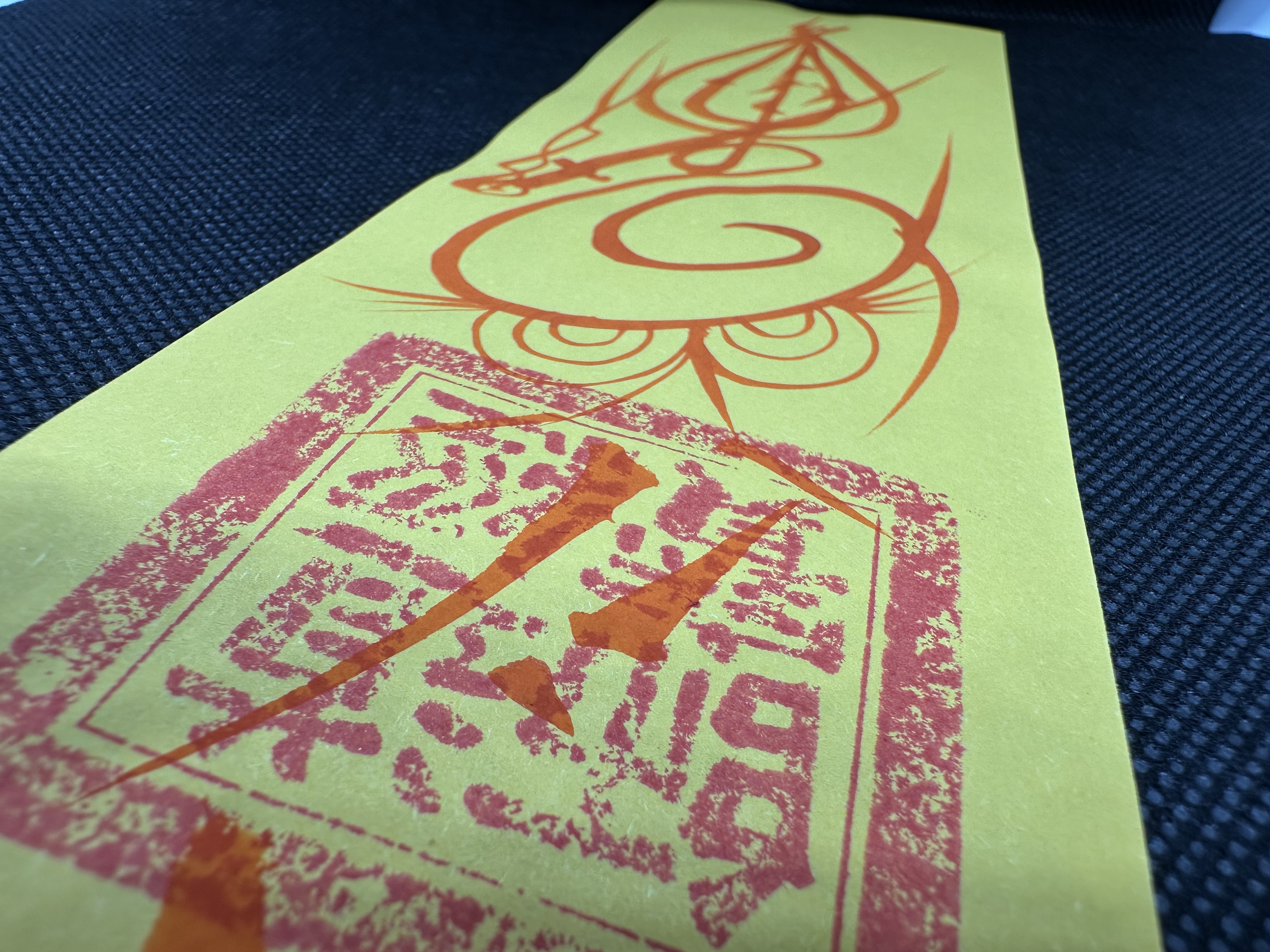
A Zhong Kui talisman-inspired artwork need not reproduce a portrait to carry the story forward. Look instead at the materials and gestures: yellow paper, cinnabar-red marks, seal-like framing, compressed lines, and changes in the pressure of the brush. Together they make a small field of movement—part calligraphy, part graphic design, part cultural memory.
The close details matter. A hand-drawn mark preserves irregular edges and the physical trace of the brush; a folded form recalls the objecthood of paper rather than treating it only as an image. These are material and artistic features, not claims of supernatural efficacy. They invite a slower kind of looking: one that connects paper, pigment, storytelling, and the person who made the work.
Why this figure still speaks today
Modern readers encounter Zhong Kui through museum collections, family customs, games, films, paintings, and contemporary calligraphy. The question behind the figure remains approachable: how do we face the uncertain or the unjust without losing composure? Zhong Kui gives that question a memorable face. His intensity is not simply frightening; it is disciplined, watchful, and deeply human in the way legends often are.
At Xuanzhen Ge, hand-drawn talisman calligraphy is presented as cultural artwork. Each piece is made to order for people who value Chinese visual traditions, brushwork, and the stories carried around them. Learning the legend does not turn the work into an instruction manual. It makes it richer to look at.
Further looking
For a museum view of Zhong Kui imagery, see the Palace Museum's Dai Jin, The Night Excursion of Zhong Kui and the Smithsonian's guide to Zhong Kui and Lunar New Year.