ZHONG KUI SERIES · 02
The guardian in motion
Chinese artists did not give Zhong Kui one unchanging face. He can be a huge official, a traveller, a judge, a scholar, or the commanding center of a lively band of small spirits. His visual vocabulary is recognisable—sword, robe, beard, fierce eyes—but each artist makes a different emotional world around it.
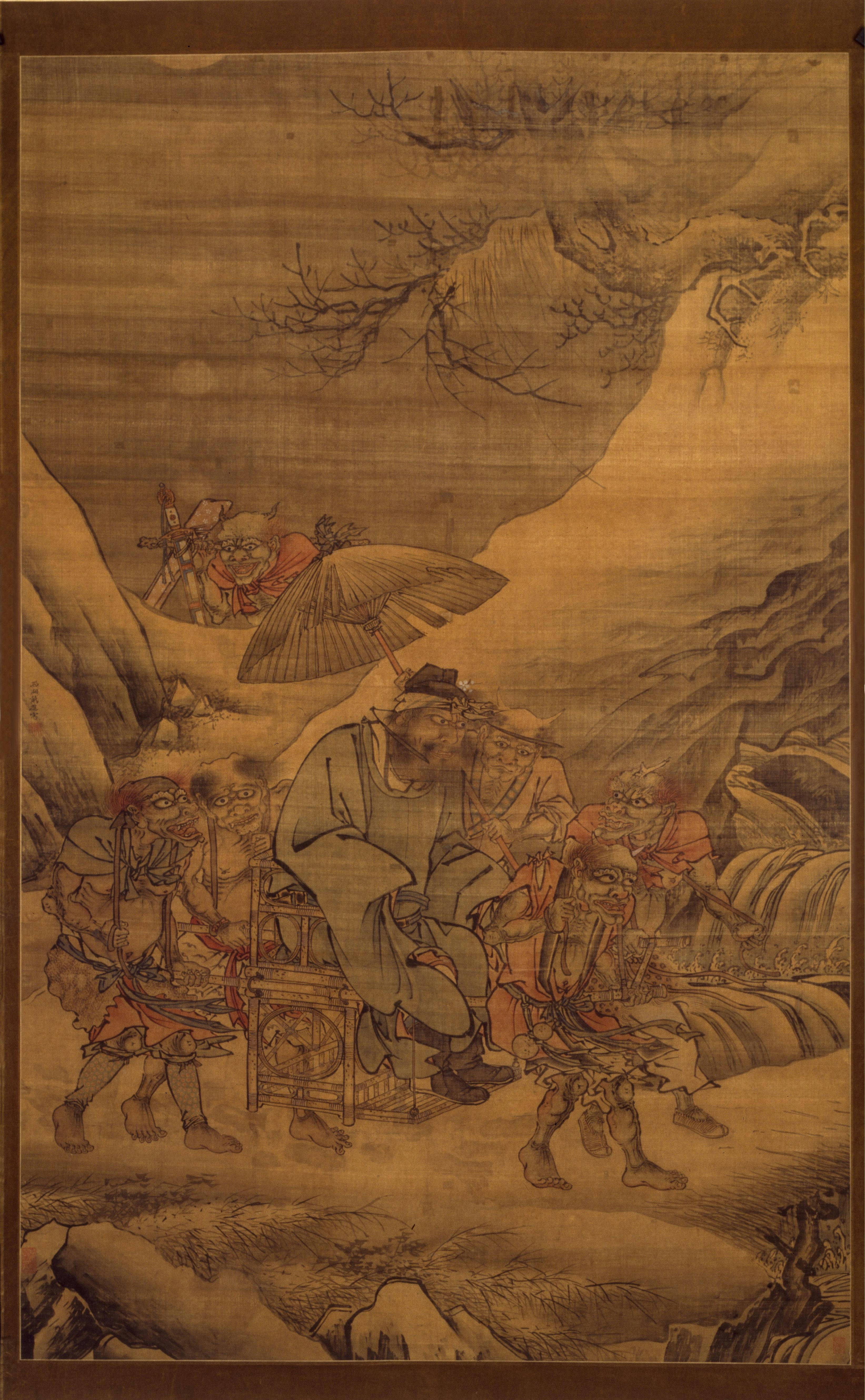
A night journey in paint
In Dai Jin's fifteenth-century The Night Excursion of Zhong Kui, Zhong Kui moves through a cold, snowy landscape while small demons attend him. The Palace Museum describes the scene as a night patrol: the surrounding rock, snow, and washed ink create an atmosphere of winter darkness, while Zhong Kui's gaze holds the composition together.
The image is useful because it shifts the legend away from a static “monster-fighter” picture. Here, Zhong Kui travels. He is alert, surrounded by motion, and placed within a landscape. The painting turns guardianship into a narrative scene rather than a single symbol.
Pictures for the season
Historically, Zhong Kui images were often displayed as seasonal pictures around the New Year. By the late Ming and early Qing, the custom of hanging them also became associated with the Dragon Boat Festival. This does not make every Zhong Kui painting a ritual object; it shows how art, festival time, and household imagination could meet in the same image.