ZHONG KUI SERIES · 03
Paper, pigment, and the trace of a hand
A talisman-inspired artwork does not need to reproduce Zhong Kui's face to carry the cultural memory of his story. Its meaning begins with material: yellow paper, cinnabar-red marks, a compact composition, and the uneven pressure of a hand-drawn line.
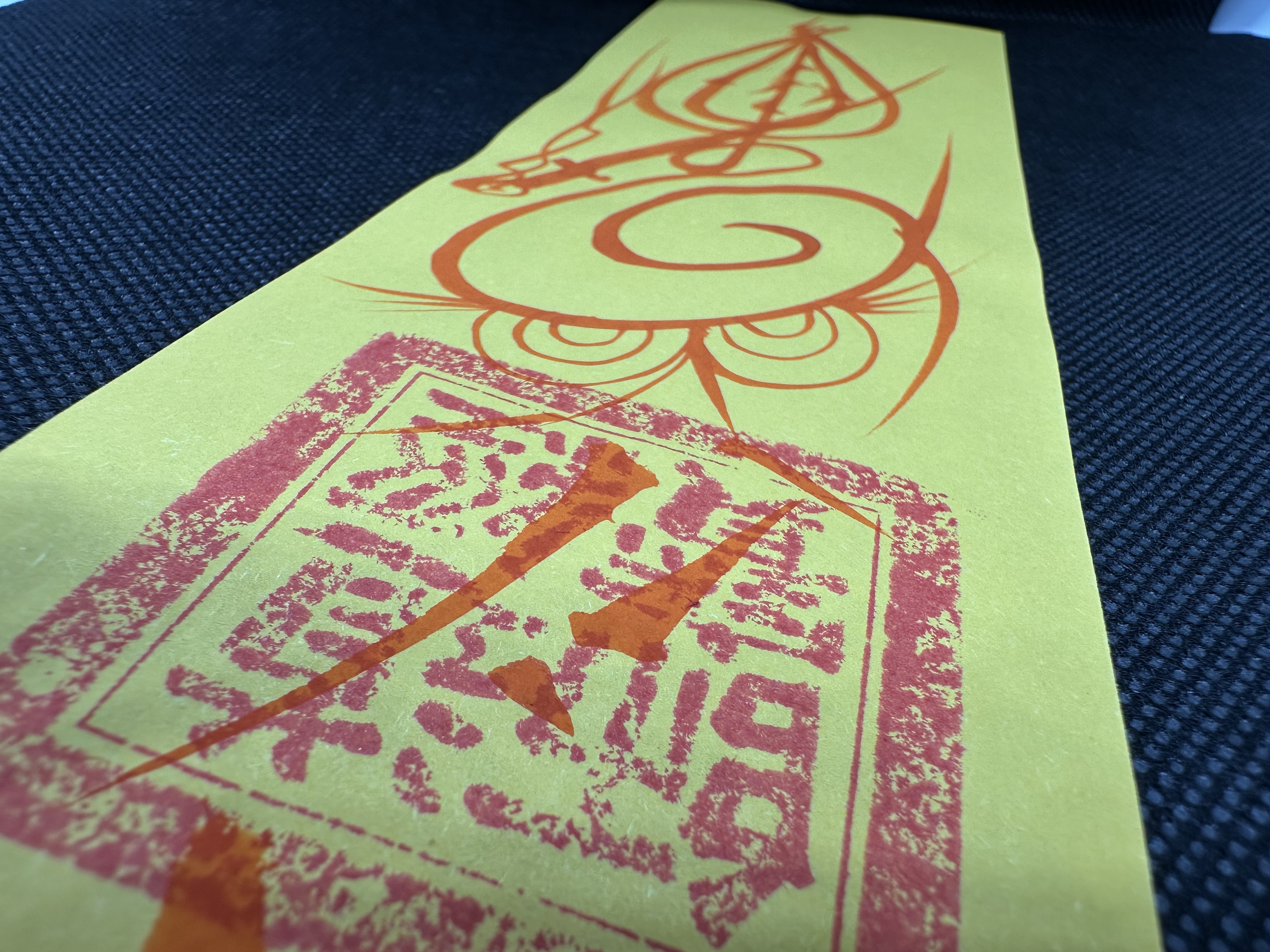
Cinnabar-red detail. At close range, irregular edges and changing density make the marks visibly handmade.
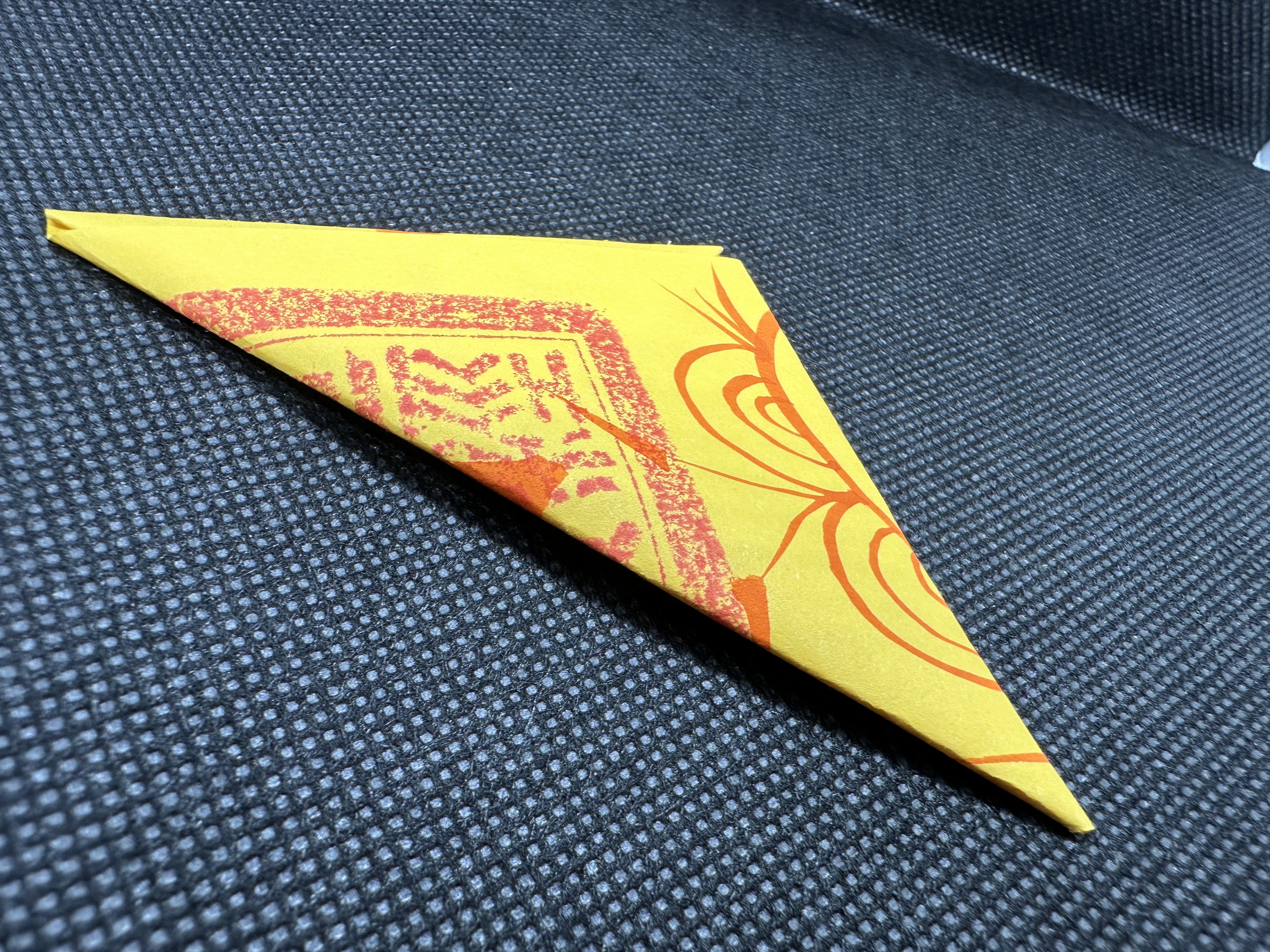
Folded form. The paper becomes a physical object with a front, reverse, edges, and a history of handling.
Why look closely?
Digital images often flatten a hand-drawn work into a simple symbol. A close detail brings back the paper fibre, the grain of pigment, and the small variations left by the maker. Those variations are not flaws to hide; they are part of what distinguishes a hand-drawn artwork from a duplicated graphic.
The form is part of the story
Folding changes how a paper work is understood. It reminds us that the piece has a material life beyond the screen: it can be held, stored, unfolded, and viewed at different distances. Along with the yellow ground and red marks, the fold creates a bridge between calligraphy, craft, and the broader visual traditions around talismanic paper.
These visual and material elements are presented as cultural art. They are not promises of supernatural protection, medical benefit, or guaranteed results.